 One Place Solar
How Commercial Solar Design Helps Businesses Reduce Energy Costs
A closer look at how precise, code-compliant engineering — not just panel count — determines whether a commercial solar investment actually pays off.
Every commercial building owner eventually asks the same core question: how do we cut energy costs without disrupting daily operations? For warehouses, manufacturing plants, office complexes, and retail properties, electricity is often one of the largest recurring line items on the budget. Solar power offers a way to convert that expense into a long-term asset, but only when the underlying engineering is done correctly. This is where commercial solar design becomes the deciding factor between a system that quietly pays for itself for twenty-five years and one that underperforms, triggers costly change orders, or stalls in permitting for months.
Commercial solar design is not a scaled-up version of a residential rooftop project. It involves larger arrays, more complex electrical infrastructure, stricter code requirements, and a much bigger financial commitment. Businesses that treat design as an afterthought, or hand it to an unqualified vendor, often discover the hard way that a few missing calculations or an oversized system can quietly erase years of projected savings. Businesses that invest in professional, code-compliant commercial solar design set themselves up for predictable performance, faster approvals, and a materially better return on investment.

A well-engineered rooftop array on a commercial warehouse, sized to actual load rather than roof space alone.
Why Commercial Solar Design Directly Affects Your Bottom Line
A solar array is only as good as the engineering behind it. Panel count and roof space are the easy part; the real value of commercial solar design lies in translating a building’s actual energy profile, structural capacity, and utility environment into a system that produces exactly what it should, for as long as it should.
Three factors make commercial projects fundamentally different from residential ones, and each has a direct cost implication:
Scale amplifies small errors. A miscalculated load on a residential roof might cost a homeowner a few hundred dollars in wasted capacity. On a 500 kW commercial system, the same percentage error can mean tens of thousands of dollars in oversized equipment, unused panels, or an undersized inverter that throttles production during peak sunlight hours.
Regulatory complexity multiplies revision risk. Commercial buildings face stricter fire setback rules, structural load requirements, and utility interconnection standards than single-family homes. A plan set built without deep familiarity with these codes tends to bounce back from the Authority Having Jurisdiction (AHJ) repeatedly, and every revision cycle adds weeks of delay — a real cost when a business is still paying full retail rates while the system sits unapproved.
Financing depends on defensible numbers. Lenders, investors, and finance teams want production estimates, payback periods, and incentive calculations they can trust. A design built on rough assumptions rather than precise site data and utility rates makes it harder to secure favorable financing terms.
Five Ways Professional Commercial Solar Design Reduces Energy Costs
1. Right-Sizing the System to Actual Consumption
The most common design mistake in the industry is sizing a system around available roof space rather than the building’s real consumption pattern. A thorough commercial solar design process starts with a detailed review of twelve months of utility bills, identifying peak demand charges, time-of-use rate structures, and seasonal usage swings. This data-driven approach prevents both under-sizing, which leaves savings on the table, and over-sizing, which wastes capital on panels that will never offset enough grid electricity to justify their cost.
2. Optimizing Equipment Selection for Long-Term Yield
Not all inverters, racking systems, and panel technologies perform equally across different roof types, climates, and shading conditions. Choosing equipment based on upfront price alone often leads to lower energy yield over the system’s lifetime. A properly engineered design matches inverter topology and panel specifications to the site’s real-world conditions, protecting energy production for the full 25-plus year lifespan of the array.
3. Structural and Electrical Accuracy That Prevents Rework
Structural load calculations confirm that a roof, canopy, or ground-mount foundation can safely support the array under wind and snow loads, while electrical design ensures the system integrates cleanly with existing switchgear and service capacity. Getting these calculations right the first time avoids expensive field rework, change orders, and inspection failures, all of which add unplanned cost to a project after construction has already begun.
Structural and electrical review is where most avoidable project costs are caught before they reach the field.
4. Maximizing Available Incentives From the Start
Federal tax credits, accelerated depreciation, state rebates, and utility incentive programs can significantly change a project’s payback period, but many of these programs have specific technical or documentation requirements. Building incentive eligibility into the design phase, rather than trying to retrofit paperwork after installation, ensures a business captures every dollar it is entitled to.
5. Reducing Permitting Delays That Extend Payback Timelines
Every month a system sits waiting for permit approval is a month of full-price electricity bills instead of solar savings. AHJ-ready plan sets, prepared by engineers who understand local code nuance, dramatically cut down on rejection cycles. A 98% first-pass approval rate is not a marketing statistic; it translates directly into weeks or months of avoided delay and faster time to savings.
What a Rigorous Commercial Solar Design Process Looks Like
A dependable commercial solar design workflow generally follows five stages, each building on the data gathered in the last:
- Site assessment — Roof or ground conditions, shading analysis across all four seasons, structural review, and an audit of the existing electrical service and available interconnection points.
- Load analysis and system sizing — Twelve months of utility data analyzed against production modeling software to size the array around actual consumption rather than available space alone.
- Equipment selection and layout — Panel, inverter, and racking choices matched to the site’s structural capacity, shading profile, and long-term maintenance considerations.
- Engineering and stamping — Structural and electrical calculations reviewed and certified by a licensed Professional Engineer, producing a plan set ready for AHJ submission.
- Permitting and interconnection support — Coordination with the local building department and utility to secure approval, followed by permission-to-operate paperwork once installation is complete.
Skipping or rushing any one of these stages tends to surface later as a change order, a permit rejection, or underwhelming production data once the system is live.
Common Design Mistakes That Quietly Inflate Costs
Even experienced installers can fall into predictable traps when commercial solar design is handled without dedicated engineering support:
- Sizing systems from satellite imagery alone, without an on-site structural review
- Ignoring time-of-use utility rates when modeling savings, leading to overly optimistic payback projections
- Submitting plan sets with outdated NEC references or inconsistent single-line diagrams, guaranteeing at least one AHJ rejection
- Failing to account for future load growth, such as EV charging or facility expansion, which forces a costly redesign later
- Choosing the lowest-cost equipment without verifying its performance under the site’s specific shading and climate conditions
Each of these mistakes is avoidable with a structured, engineering-led design process, and each one has a direct, measurable effect on the total savings a business ultimately realizes from its solar investment.

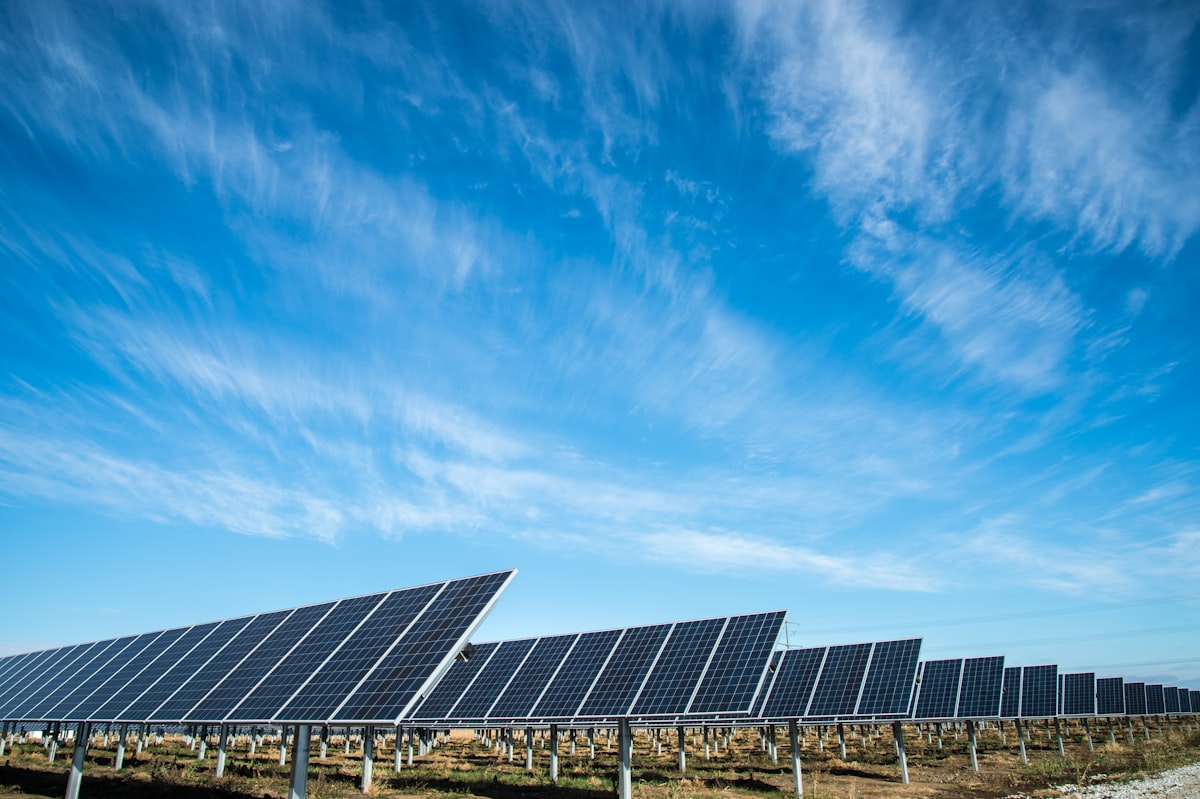
Ground-mount commercial arrays face their own structural and interconnection considerations distinct from rooftop systems.
Frequently Asked Questions
Savings vary by building type, utility rate structure, and system size, but a properly designed commercial system typically offsets a significant majority of a facility’s electricity consumption, with payback periods commonly falling within five to seven years depending on incentives and financing.
A complete plan set, from initial site assessment to AHJ-ready documentation, can typically be delivered within days when handled by an experienced design and engineering team, though timelines vary with project complexity and jurisdiction.
Yes. Nearly all jurisdictions require structural and electrical calculations to be certified by a licensed Professional Engineer before a commercial system can be permitted.
Yes, and it should. Building anticipated future loads into the initial design prevents costly electrical service upgrades or full redesigns down the line.
The Real Return on Investing in Design
Businesses often focus solar budget conversations on panel brand or installer price, but the design phase is where most long-term savings are protected or lost. A precise, code-compliant commercial solar design ensures a system is sized correctly, engineered to survive its full operational lifetime, eligible for every available incentive, and able to move through permitting without delay.
The question is not whether professional design costs more upfront. It is whether an under-engineered system, with avoidable revisions and underperformance, costs more over the following twenty-five years. One Place Solar works with installers, EPC companies, and commercial property owners to deliver accurate, permit-ready commercial solar design that protects the timeline and long-term return of every project.
Get a Permit-Ready Commercial Design
One Place Solar delivers accurate, code-compliant commercial solar design with a 98% AHJ approval rate — so your project moves from proposal to production faster.
Request a Free Quote